J
Written by Jim · A bold mountain creek runs through our property ·
@hikeoldrag
Last updated August 18, 2026 — always confirm current regulations before you fish.
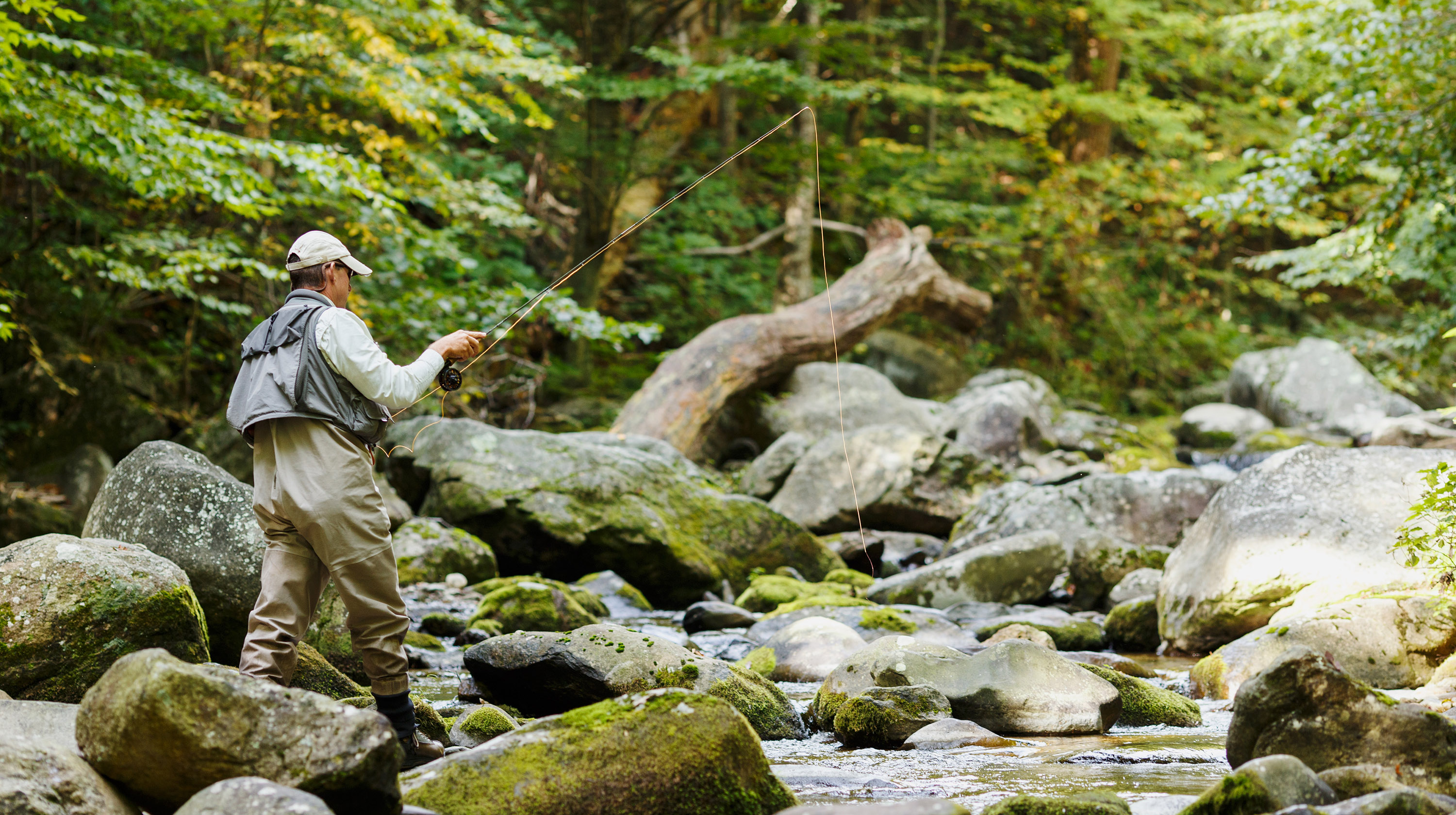
Virginia's brook trout is the only trout native to these mountains, and the headwater streams of Shenandoah National Park are its last real stronghold. They are small fish in small water — a nine-incher is a trophy — and catching one is less about skill than about patience, stealth, and a willingness to walk. The Rapidan River is the most storied of them, and it's the reason Herbert Hoover put his presidential retreat two ridges from our front door.

Skip the 6 a.m. drive
Sleep right near the trailhead
5+ private acres bordering Shenandoah National Park. Walk to Old Rag and White Oak Canyon. Whole property to yourself.
Check Dates
The regulations (read this first)
Shenandoah's rules are stricter than general Virginia trout regs, and they exist because brook trout populations are declining. Getting them wrong is both a citation and a genuine harm.
| License | Valid Virginia state fishing license for anglers 16+. No separate state trout license and no park permit required. |
|---|
| Season | All park streams open to catch-and-release year-round |
|---|
| Tackle | Artificial lures with single-point hooks only. Dropper flies in series are permitted. |
|---|
| Bait | Prohibited — no worms, corn, cheese, minnows, or chemical attractants |
|---|
| Brook trout | Release immediately on most park streams |
|---|
| Brown & rainbow | 7-inch minimum where harvest is allowed (17 designated streams) |
|---|
| Also banned | Snagging; more than one line per angler |
|---|
Regulations change. Verify before you fish.
Stream-specific rules, harvest lists and license requirements are updated by the NPS and the Virginia DWR. Check both the week of your trip — this page is a starting point, not a legal authority.
Where to fish around here
Madison County sits at the base of a whole east-slope watershed. Within a short drive of Syria you have:
- The Rapidan River — the famous one. Wild native brookies in the headwaters, and the water that decided the location of Rapidan Camp. Access from the Graves Mill side or from up near the camp itself. The upper reaches are the real prize and they require walking.
- The Staunton River — a Rapidan tributary, steep and beautiful, reached from the Graves Mill area. Less pressure than the Rapidan proper.
- The Conway River — forms part of the Madison–Greene line, with both park and wildlife-management-area water.
- The Robinson River — flows down past Syria and Criglersville out of the park.
- The Rose River — a lovely small stream with waterfalls, often paired with a hike.
- Hughes River — drains the Old Rag side of the valley.
- Cedar Run & White Oak Run — the same drainages as the waterfall hikes; small pocket water, and pretty.
The Rapidan Wildlife Management Area adjoins park land and offers additional public access under state regulations, which differ from the park's. Know which side of the boundary you're standing on.
Licenses, tackle and lessons, five minutes away
Graves Mountain in Syria sells fishing licenses and tackle at its Market, Deli & Tackle (open 7 a.m., 540.923.4212), and runs fly fishing lessons and guiding on two streams and three ponds on the farm — including Murray's spring clinics. If you're new to brook trout water, learn there first, then go find the wild fish in the park.
What else is nearby →
Gear & flies
Leave the nine-foot five-weight at home. These are tight, brushy, boulder-strewn streams where a long rod is a liability.
- Rod: 7 to 7.5 feet, 3 or 4 weight. Short enough to cast under rhododendron.
- Line & tippet: floating line, light tippet — 5x or 6x.
- Flies: brook trout here are opportunistic, not selective. Dry flies work beautifully. Small attractor patterns, terrestrials in summer — ants and beetles are deadly — and a dropper nymph when they're sulking.
- The local pattern: ask about the Mr. Rapidan, a fly tied specifically for this water and still the sentimental favourite on the river.
- Wading: felt is banned in many places for invasive-species reasons; use rubber-soled boots, ideally studded. The rock here is genuinely slick.
- Also bring: polarized glasses, a small net, and knee-friendly expectations — you'll be climbing more than wading.
How to actually fish these streams
The single biggest mistake visiting anglers make is fishing these like a western river. They aren't. They're a series of small plunge pools connected by pocket water, and the fish can see you long before you see them.
- Move upstream. Brook trout face into the current; approaching from below keeps you behind them.
- Stay low and slow. Kneel. Use boulders as cover. Your shadow on the water ends that pool.
- Short casts. Ten or fifteen feet is normal. Accuracy beats distance every time.
- Fish the pockets, not just the pools — the seam behind a boulder holds fish.
- Cover water. Two or three casts per pool, then move. If a fish is there and willing, you'll know quickly.
- Walk farther than you want to. Pressure drops off sharply with distance from the trailhead, and the fishing improves in direct proportion.
When to go
- Spring (April–June): the best window. Good flows, warming water, hungry fish, and everything green.
- Summer: tough when streams run low and warm. Fish early morning, get high into the headwaters where it stays cold, and consider giving the fish a break in a heat wave — warm water is hard on brook trout.
- Fall: excellent. Pre-spawn brookies turn spectacular colours and get aggressive. Overlaps peak foliage and Graves Mountain's Apple Harvest Festival — a very good weekend to be here.
- Winter: legal and quiet. Slow fishing, but you'll have the water entirely to yourself.
Watch the flows.
After heavy rain these streams blow out fast and fish poorly for a day or two; in drought they drop to a trickle. Our creek runs off the same watershed, so a look at it tells us how the local streams are running — I post it to
@hikeoldrag.
Handling native brook trout
These are wild fish in declining populations, living in a warming climate at the southern edge of their range. Treat them accordingly.
- Barbless or pinched barbs. Faster release, less damage.
- Wet your hands before touching a fish, and keep it in the water.
- Skip the grip-and-grin in warm weather. If you want the photo, take it fast and low over the water.
- Don't fish warm water. If the stream is running low and hot, go hiking instead.
- Clean your boots between watersheds. Didymo and other invasives travel on felt and gravel.
Water on the property
A creek you can hear from bed, and two ponds of your own
Birch's Library sits on 5+ private acres bordering Shenandoah National Park, with a bold mountain creek running through it that feeds two ponds — historically stocked with trout, and we're restocking for catch-and-release. Fish the Rapidan by day, come back to your own water in the evening. The whole property is yours; no other guests on site.
★ 5.0 on Airbnb (Guest Favorite) · 10/10 on Vrbo · Dogs welcome · Starlink Wi-Fi for the flow gauges
Check dates at the cabin →
FAQ
Do I need a trout stamp?
Not for Shenandoah National Park waters — a standard Virginia fishing license covers you. Requirements can differ on state-managed water like the Rapidan WMA, so check which you're on.
Can I keep what I catch?
Brook trout must be released on most park streams. Brown and rainbow trout of 7 inches or more may be harvested on designated streams only. When in doubt, release it.
Can I use worms?
No. Artificial lures with single-point hooks only, park-wide.
Is there a guide service nearby?
Several Virginia outfitters guide the Rapidan and the surrounding streams. If you're staying with us, ask and we'll point you to who's currently working this water.
Can beginners catch these fish?
Yes — brook trout are famously willing. The hard parts are the approach and the casting room, not fooling the fish. A patient beginner with a short rod does fine.
Can I fish at Rapidan Camp?
Yes, under the same park regulations. Standing in the water Hoover chose this spot for is worth the walk in on its own. See the Rapidan Camp guide →
Keep planning
📷
@hikeoldrag
Creek levels, hatches, and life on the water
When the streams are blown out, when they're perfect, and what's happening on an 1865 homestead in between.
Follow @hikeoldrag